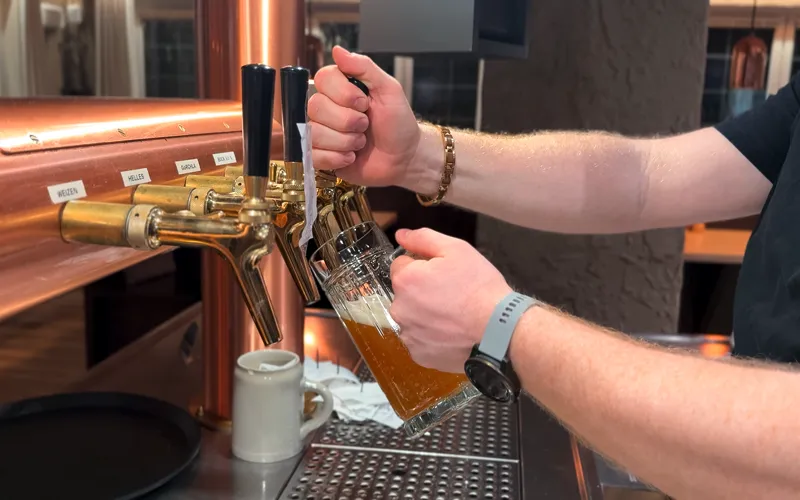
Passion for brewery technology since 1677

How KASPAR SCHULZ is shaping the history of beer in Bamberg
Anyone arriving in Bamberg quickly realizes that here, beer is more than just a beverage – it’s part of the city’s identity. Hardly any other place in Germany has such a high concentration of breweries – ranging from traditional family-run operations to modern craft breweries. As soon as we step out of the car, we notice the scent of malt in the air. Nearby is one of the region’s largest malt houses. Right in the center of this centuries-old beer culture is the home of KASPAR SCHULZ Brauereimaschinenfabrik & Apparatebauanstalt GmbH (Brewery Machinery & Equipment Manufacturing Company, LLC). Without this company, many of the local beers would never be brewed. But even in a company steeped in tradition like this one, nothing works without professional welding technology.
All the information at a glance
- The world's oldest manufacturer of brewery plants
- Custom products instead of mass production
- Stainless steel and constrained positions
- Proven TIG welding technology from ABICOR BINZEL
- xFUME® technology: clean air in storage tanks and welding shops
- Young talent, passion, and optimization with a sense of proportion
- A little anecdote
- Technology you can taste
- Documentation
Founded in 1677 as a small coppersmith's workshop, this family-owned business, now in its tenth generation, is the world's oldest brewery machinery manufacturer. In Bamberg, it is the oldest industrial company still in operation. Worldwide, it is the only company that offers comprehensive solutions for all three segments – brewing, malting, and distilling – from a single source. Today, KASPAR SCHULZ employs over 140 people, the majority of whom work in production.
The company has been based at its current location on the outskirts of Bamberg since the 1970s. In 2014, a new production facility was opened – featuring a striking, brushed-metal façade. The design was created by the company’s own management: Johannes Schulz-Hess, who has led the company since 2008, is a trained architect and personally designed the facade of the new facility at its current location at Kaspar-Schulz-Straße 1.
About 60 skilled workers in plant and storage tank construction carry out welding tasks on a daily basis. This is a clear indication of the role that manual welding plays in the company. “For us, welding is not a peripheral technology – it is the core of our manufacturing”, explains Daniel Nüßlein, Welding Supervisor at KASPAR SCHULZ.

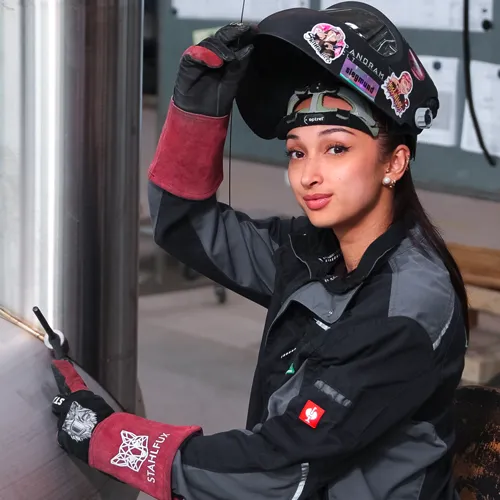
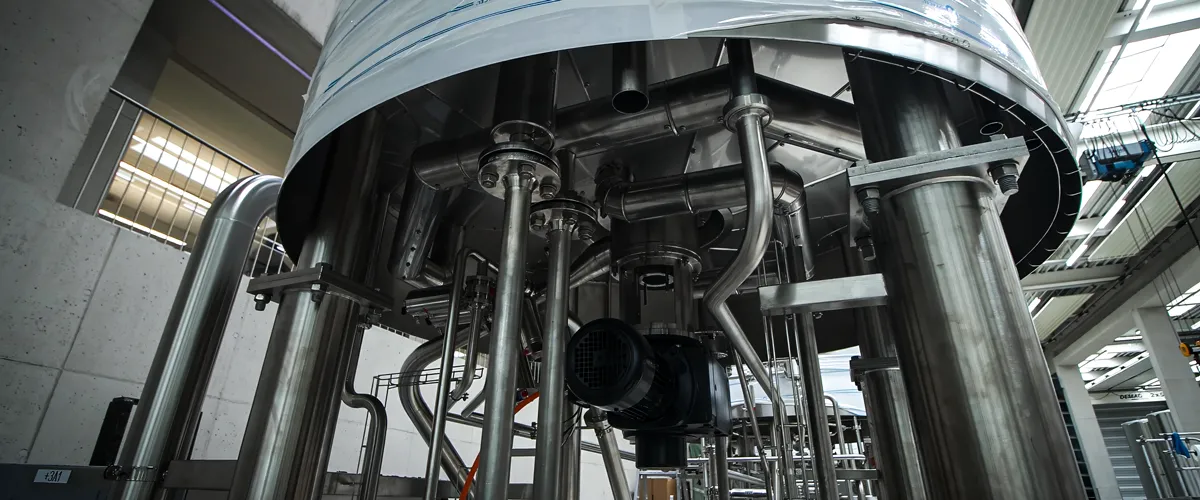
KASPAR SCHULZ manufactures brewhouses with capacities of up to 300 hectoliters, malting systems, plant equipment, and fermentation and storage tanks – both refrigerated and non-refrigerated – exclusively from stainless steel. The traditional craft of copperwork continues to this day and is used primarily in the manufacture of distillation systems and copper cladding for brewhouses.
Upon entering the production hall, the sounds remind us a bit of those at a shipyard. The hum of the many TIG torches is repeatedly interrupted by loud impacts on large metal surfaces. Of course, every now and then something needs to be fixed. Ear protection is definitely a must. Every new product is custom-made, precisely tailored to the customer’s space, specifications, and requirements. Automation and robotics have played virtually no role in the process so far. Ultimately, the same applies to all systems: If “SCHULZ” is printed on the outside, “SCHULZ” and “Made in Bamberg” is inside, too. From the first step of production all the way through commissioning.
The reasons for this are obvious: complex geometries, large components, and often limited access require the highest level of adaptability and craftsmanship. “Our systems are custom-made. This requires experience, flexibility, and people who are masters of their craft”, says Patrick Fuchs, Head of Production at KASPAR SCHULZ.
Welding is primarily performed using the tungsten inert gas (TIG) welding process. This process offers the precision, surface quality, and process reliability that are essential in hygienically sensitive tank construction. MIG/MAG welding is used only for the base structures of brewhouses or storage tanks – for example, for the so-called “elephant feet” that later support the tanks and are anchored to the floor. However, the same rule applies here as well: stainless steel without exception. All employees involved in the construction of pressure-loaded storage tanks hold the appropriate DVS certifications, which must be renewed regularly.
Often, the biggest challenge is not the material itself, but the work environment. A lot of welding takes place inside the tanks. The access hatches are narrow, space is limited, and working positions are inevitably uncomfortable.
“Sometimes it’s almost impossible to get in there – and definitely not wearing a welding helmet”, says Dennis Kampa, a TIG welder with over ten years of experience at the company. That’s why special, extra-flat welding masks are used, which gleam silver in a very futuristic way and are strongly reminiscent of “Star Wars.” However, the welders prefer more flexible solutions consisting of round protective lenses with integrated leather protection.
"Sometimes it’s almost impossible to get in there – and definitely not wearing a welding helmet."
Dennis Kampa
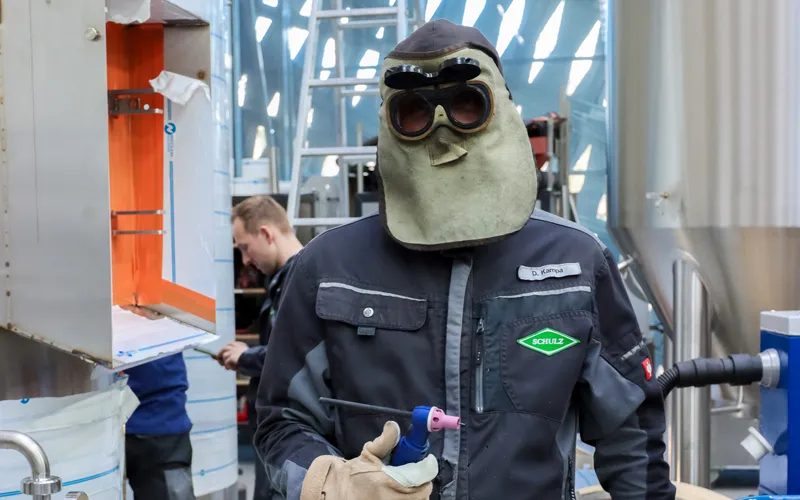

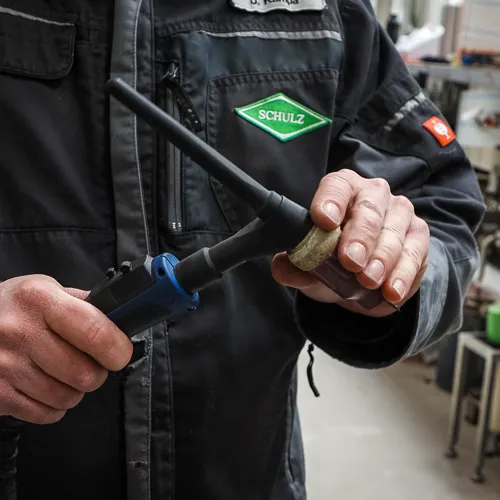
ABICOR BINZEL TIG torches are a common sight throughout the KASPAR SCHULZ plant. For many years, various generations of TIG welding torches, such as those in the ABITIG® series, have been in use here – ranging from standard torches like the ABITIG® GRIP and the ABITIG® GRIP Little to models with flexible torch necks. “We’ve been working with BINZEL torches for a very long time. This stuff just works. And if there’s ever a problem, we know who to call”, emphasizes Daniel Nüßlein.
KASPAR SCHULZ also uses ABICOR BINZEL’s flexible TIG torch necks to make it easier for welders to weld even in hard-to-reach areas, such as piping, ensuring that the work is performed properly and safely. Large gas lenses and jumbo gas nozzles ensure a stable shielding gas coverage, which is crucial for preventing oxidation and discoloration. In addition, back purging is often used, which means that when welding a tank, gas is allowed to flow into the weld joint from the outside while welding is performed from the inside at the same time. This protects the root from contamination.

Much of the welding work takes place inside the storage tanks. If welding is performed inside a tank without a fume extraction system, the welder is particularly exposed to the fumes generated by the process. Therefore, occupational health and safety plays a central role when working inside storage tanks.
In this context, KASPAR SCHULZ specifically relies on extraction torches and the extraction systems from the xFUME® TIG series by ABICOR BINZEL. “When you’re sitting inside a tank, you don’t want the fumes in your face. The extraction torch really makes a difference”, explains Dennis Kampa, speaking from experience. Extraction directly at the source noticeably reduces exposure without restricting mobility during welding. This long-established company is increasingly using welding fume extraction torches for TIG welding in storage tank construction.
In the MIG/MAG section – known internally as the welding shop – KASPAR SCHULZ relies on the xFUME® PRO extraction torch with a matching extraction system for welding components such as “elephant feet”, which serve as the base for stainless steel containers.
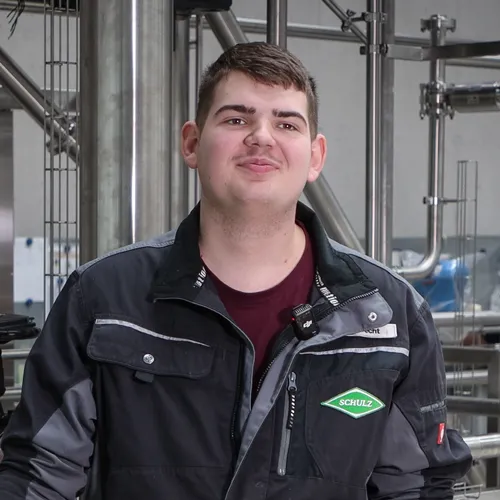
"What we weld here lasts 50 or 60 years."
Louis Albrecht
KASPAR SCHULZ makes targeted investments in education and training. One example is Louis Albrecht and Louis Neuberth, who have just successfully completed their apprenticeships and are already award winners in the Bavarian competition for young welders, organized by the German Association for Welding and Related Processes (DVS). “What we weld here lasts 50 or 60 years. And in the end, beer is brewed in it – that just makes us proud”, says Bavaria’s best young TIG welder, Louis Albrecht, who is currently building outdoor kitchens for his father and, of course, has also purchased a welding torch from ABICOR BINZEL for personal use.
Many employees feel a strong connection to this warm and welcoming Bavarian family-owned company, not least because of joint events such as the SCHULZ beer festival, to which all employees as well as representatives from the beer, brewing, and beverage industries are invited to the Bamberg site. Everyone contributes to the preparations to ensure the success of this event, which attracts around 500 participants and features over 100 specialty beers from around the world – all brewed using equipment from Bamberg.
No major automation initiatives are currently planned. Instead, the focus is on targeted process optimization. One topic: TIG cold wire feeding. “For long welds, we see potential to achieve faster and more consistent results with cold wire”, explains Daniel Nüßlein, looking ahead to future projects such as those involving the ABIDRIVE V2 wire feed unit from ABICOR BINZEL.
During our visit to Bamberg, our small team stayed at the family-run hotel Brauerei Gasthof Höhn in Memmelsdorf. This historic brewery had received their storage tanks from KASPAR SCHULZ in 1962. We were even shown the digitized delivery documents from 1962, complete with the original signatures. The hotel manager remembered very well when they had received the storage tanks that year as part of the expansion of their in-house brewery.
Wherever KASPAR SCHULZ equipment is used for brewing, precise craftsmanship is involved. During our visit to the production hall, an almost finished brewhouse for the Kreuzberg monastery brewery in the Rhön region stood right next to a fully packaged brewhouse waiting to be shipped to Bali. By now, at the latest, it becomes clear that there are beer lovers not only in Germany, but all over the world. Without KASPAR SCHULZ and the welding technology from ABICOR BINZEL, fewer people would be able to enjoy a “cool beer with a nice head”. Enjoying beer – whether in Bamberg or Bali – simply is not possible without welding.